


Applaydu Play & Discover
4.21.23K Reviews
App Specs
- Version
- 7.0.0
- Updated On
- License
- Free
- Downloads
- 50,000,000+
- Developer
- Ferrero Trading Lux S.A.
- Categories
- Educational
- Platform
- Android, iOS
Screenshots






 Analysis by AppCompare
Today, we're diving into the colorful and engaging world of Applaydu Play & Discover. If you've got kids or just a playful spirit, this app promises a delightful blend of learning and fun. Let’s see if it really lives up to the hype!
The first-week appeal: easy to explore, easy to share
The moment I launched the app, I was greeted with vibrant colors and friendly characters. The interface is intuitive, which is crucial for keeping the little ones engaged. Kids can easily navigate through the app, thanks to its simple design and clear instructions. And let’s be honest, even as an adult, I found myself charmed by the whimsical graphics and sounds.
That quick welcome matters in a family setting. A child can look around without needing an adult to explain every screen, while a parent can sit nearby and help with the first choices. I’d treat the opening session as a chance to explore together rather than hand over the device and expect a long stretch of independent play. Ask your child what they want to try, then let them lead; that small shift makes the app feel more like a shared activity than a digital babysitter.
As an educational game, it sits between a straightforward learning app and a toy-like play space. The appeal is not just practicing a school skill: it is having characters, activities, and creative prompts to make the learning feel less like a worksheet. That makes it a better fit for children who respond to playful context than for a child who wants a clear lesson, a score, and a visible path from one skill level to the next.
Learning through play, with a practical caveat
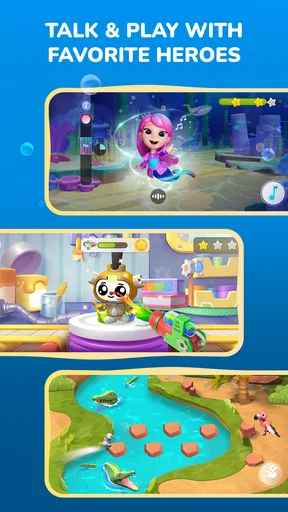
This app is all about combining fun with learning. It features a variety of mini-games that cover different educational areas, from basic math and language skills to creative problem-solving. What’s really cool is the way the app uses augmented reality. By scanning certain Kinder products, kids can unlock new content and discover more about the world around them. It’s like a treasure hunt but with an educational twist!
The scanning element creates a useful trade-off. It can give a child a reason to revisit the app after encountering a Kinder product, but it also means the experience is not equally convenient for every household. I would not make a purchase just to keep the game going. If a child enjoys the activities already available, those can be the main event; treat product-linked content as an occasional extra rather than the app’s central promise.
For a realistic everyday use, imagine a short wait at home while dinner is being prepared. I’d choose one activity together, set a natural stopping point before opening the app, and ask the child afterward what they made or learned. That gives the session a beginning and an end, and it turns a few minutes of screen use into a conversation. It is less suitable when you need a dependable, fixed-length activity, because a child who discovers something engaging may not want to stop exactly when the adult does.
Worth Reading Before You Choose

Flipboard Shows What News Apps Must Do Beyond the Feed

Switching to Android Auto Means Rethinking Your Driving Routine

Google Calendar Makes a Crowded Week Easier to Manage

Ludo King Makes the Most of the Minutes Between Plans

Baby Panda World Brings Quick Play to Modern Phones, but Its Game Library Feels Busy

ESPN’s Live Game View Makes Following Close Games Easier
Creativity that can outlast a single session
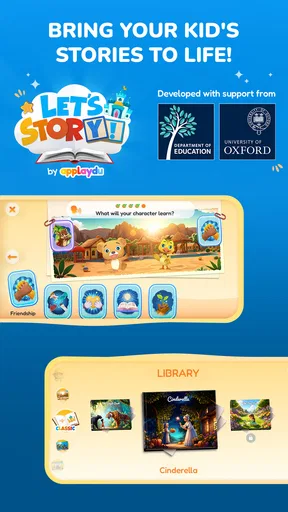
One of the standout features is the creative section where kids can let their imaginations run wild. They can draw, color, and even create their own stories. The app encourages them to think outside the box, which is fantastic for fostering creativity. Plus, it provides a safe space for them to express themselves without any judgment.
For families trying to make that creativity feel worthwhile, I’d encourage children to explain the choices behind a drawing or story instead of simply tapping through to the next thing. A parent can ask who a character is, what happens next, or what the child would change. That simple routine makes the activity more interactive without requiring extra equipment or turning play into a lesson. It also helps you see whether the child is returning because they enjoy making things or only because the screen is new.
This creative emphasis is one reason I would choose Applaydu over a collection of isolated drill games for a child who likes to invent and pretend. On the other hand, families looking for a structured curriculum, explicit skill progression, or a quiet reading routine may be better served by an app built specifically around those goals. The strengths here are variety and imaginative play, not a formal substitute for teaching.
Keeping it useful after the novelty fades
I’d judge its staying power by whether a child begins choosing different activities for different moods, rather than simply asking for the app again. In this section, I’d focus on how a small family routine can keep play varied without turning it into homework; from there, the next heading looks at the practical upkeep that can affect those returns.
Safety, supervision, and family routines
For all the parents out there, rest assured that the app takes safety seriously. It includes robust parental controls, allowing you to monitor your child's activities. You can set time limits to ensure they’re not glued to the screen all day. Plus, the app doesn’t contain any advertising or in-app purchases, so you won’t have to worry about any surprise charges.
I still recommend checking the controls with your own family’s habits in mind rather than assuming a setting will solve every screen-time question. Agree on when play happens, how long a session should feel, and what the child can do when time is up. A predictable rule is often easier for a young child to accept than an abrupt stop after they have started a story or creative task. The app can support boundaries, but the adult’s routine is what makes those boundaries work.
Applaydu is free, rated for Everyone, and made by Ferrero Trading Lux S.A. It has an average rating of 4.2 from around 120,000 ratings, with over 50 million installs. Those figures suggest that many families have tried it, but popularity alone cannot tell you whether its playful style suits your child. I’d use the first few sessions to watch what the child actually chooses, rather than judging the fit by the number of activities on screen.
Maintenance: what parents should keep in mind
While Applaydu Play & Discover is a fantastic app, there are a few things to keep in mind. The augmented reality feature requires a device with a decent camera. Also, while the app is free, accessing some content requires scanning Kinder products, which might be a bit of an inconvenience if you don’t have them on hand.
For a smoother first run, I’d check the device before introducing the scanning feature to a child: make sure the camera is usable, the app is ready to open, and an adult is available to help if the scan does not work as expected. That avoids turning a promising activity into a troubleshooting session. If the device is shared, it is also sensible to establish who gets to use it and when, so the app does not become a source of arguments between siblings.
The game is free and its current version is 6.7.1; it requires Android 9 or later. I’d keep the app updated as part of ordinary device maintenance, but I would not promise a child that every visit will bring something new. Its recurring value depends more on whether the child enjoys returning to the existing mix of learning and creative activities than on chasing constant novelty.
Where interest can dip
Another aspect worth mentioning is that the app is primarily designed for younger children, so older kids might find the activities a bit too simple. However, for the target age group, it’s a perfect blend of fun and educational content.
Even younger children can lose interest if they repeat the same kind of activity too often, or if an adult presents every session as practice rather than play. I’d rotate between the mini-games and the creative section instead of asking a child to do the same task each time. If they start asking for a different game, that is useful feedback: it may mean they have outgrown the level of challenge, not that they need more screen time.
Compared with a traditional puzzle or a physical drawing activity, the app is more portable and can combine several kinds of play in one place, but it also puts the experience on a screen and depends on a compatible device. Compared with focused educational apps, it may feel less systematic. I see it as an occasional, flexible option for a young child who enjoys stories and making things, not as the only learning tool in the household.
My long-term verdict
In a nutshell, Applaydu Play & Discover is an engaging and educational app that successfully combines learning with play. It’s a great way to keep kids entertained while also stimulating their minds. The app’s vibrant design, coupled with its innovative use of technology, makes it a standout choice for parents looking to introduce their kids to digital learning. So, if you’re in the market for an app that’s both fun and educational, this might just be the perfect fit. Give it a try and watch your little ones play and discover!
My lasting recommendation is a qualified one: it earns a place on a family device if a younger child genuinely returns to its creative and learning activities, and if a parent is comfortable setting the pace. It is less compelling for older children, families seeking a structured course, or anyone who expects every feature to be available without the Kinder scanning element. Try it during a calm, shared session first; if the child chooses to come back without being prompted, that is a better sign of lasting value than the novelty of the first launch.
Pros
- Engaging educational content for kids.
- Vibrant graphics keep children entertained.
- Simple
- intuitive interface for easy use.
- Encourages creativity and learning.
- Safe environment with no ads.
Cons
- Limited content may bore older kids.
- Requires internet for full features.
- Some games are repetitive.
- In-app purchases can be distracting.
- Might have occasional bugs.
FAQs for Applaydu Play & Discover
What age group is Applaydu Play & Discover suitable for?
Applaydu Play & Discover is designed for children aged 4 to 9 years old. The app provides educational content through engaging games and activities that enhance creativity and cognitive skills. Parents can rest assured knowing the app is specifically tailored to be age-appropriate and safe for young users.
Does Applaydu Play & Discover require an internet connection?
While Applaydu Play & Discover can be enjoyed offline, certain features may require an internet connection. For example, updates or additional content downloads might need connectivity. However, most of the activities are accessible without needing to be online, making it ideal for travel or areas with limited internet access.
Is the app free to download and use?
Yes, Applaydu Play & Discover is free to download and offers a wide range of content without any initial cost. However, some optional features or additional content might be available through in-app purchases. It's advisable for parents to review these options to manage any potential spending.
Are there any parental controls available in the app?
Applaydu Play & Discover includes robust parental controls to ensure a safe environment for children. Parents can set playtime limits, track progress, and customize the app according to their child’s needs. These controls help monitor and manage the child’s interaction with the app, providing peace of mind.
What educational benefits does the app offer?
Applaydu Play & Discover offers a variety of educational benefits, focusing on creativity, problem-solving, and cognitive development. The app includes mini-games and activities that encourage learning through play, such as puzzles, art, and storytelling. These elements are designed to support early childhood education in a fun and engaging way.


